
Pirâmide, Cinema Pyramid, Cinema
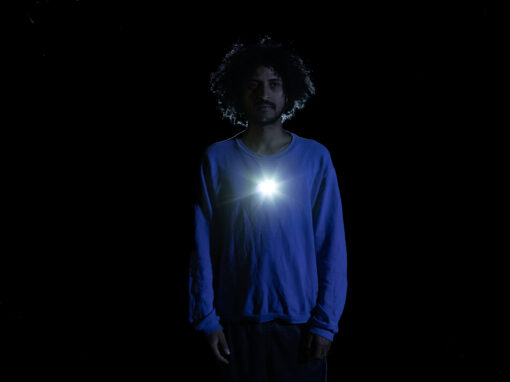
2019, Vídeo instalação, protótipo de sala de cinema Video installation, movie theater prototype
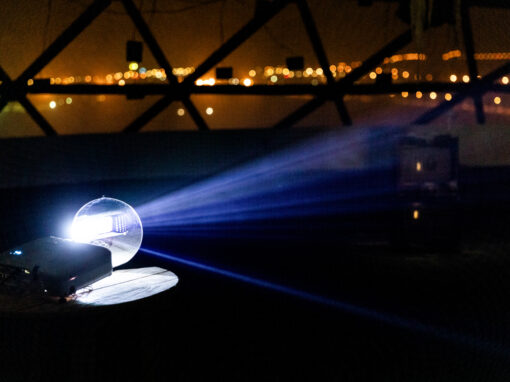
2 projetores de curta-distância, sistema de som estéreo, computador, Resolume Arena, tripé de ferro com 5 metros de altura, moldura de ferro para tela (4×1,70m), tela de malha; almofadas e tapetes de feltro
2 short-distance projectors, stereo sound system, computer, Resolume Arena, 5-meter high iron tripod, iron frame for screen (4×1.70m), mesh screen; felt pillows and rugs
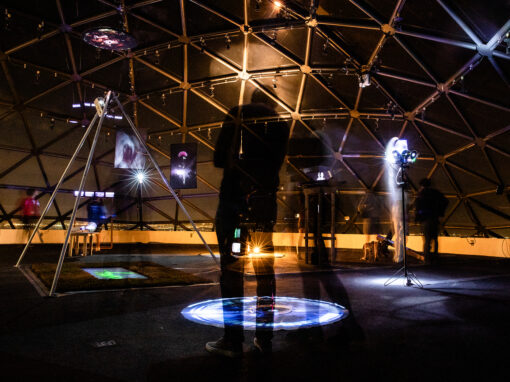
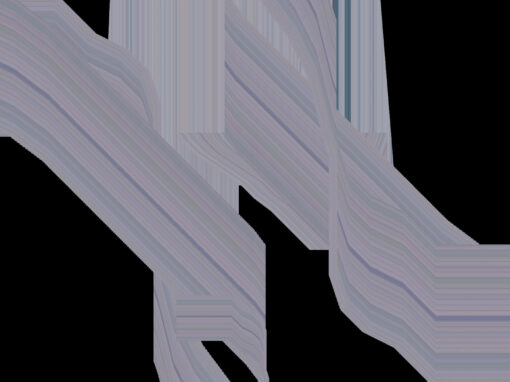
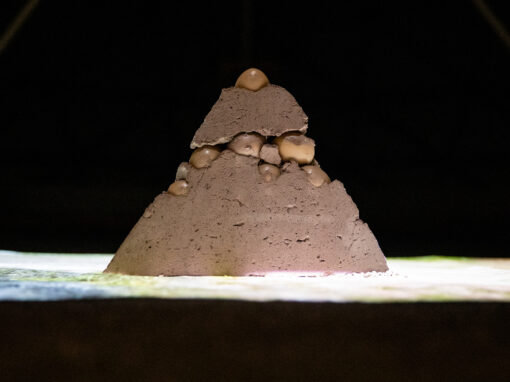
A instalação Pirâmide, Cinema tem cinco metros de altura e quatro faces triangulares regulares. Na verdade, a estrutura é um tripé de ferro que sugere a existência de faces que, sempre transparentes, mudam de acordo com o espaço em que a pirâmide está instalada. Ao desenhar as pirâmides com as quais sonhei e reparar que elas não são como as Pirâmides de Gizé no Egito, que têm cinco faces, pesquisei e descobri que o que eu estava tentando, de alguma forma, era alcançar a forma do tetraedro, um dos cinco sólidos platônicos.
Proponho Pirâmide, Cinema como um protótipo de sala de cinema, uma alternativa utópica a um dispositivo rígido, pouco afeito a mudanças.
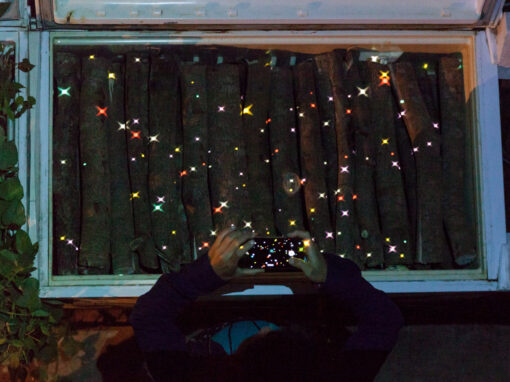
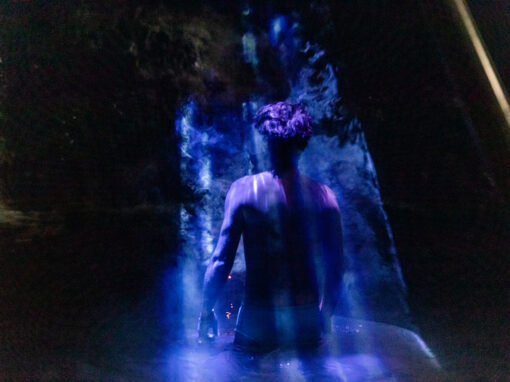
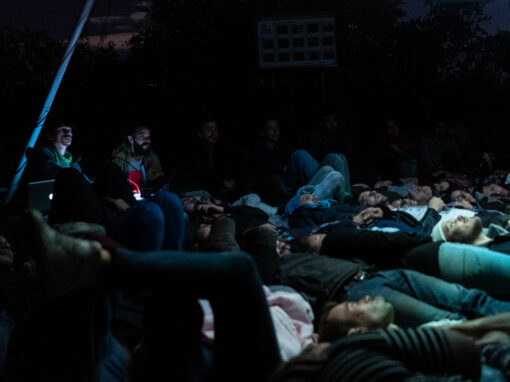
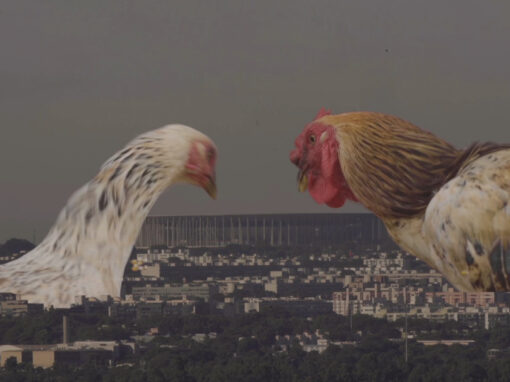
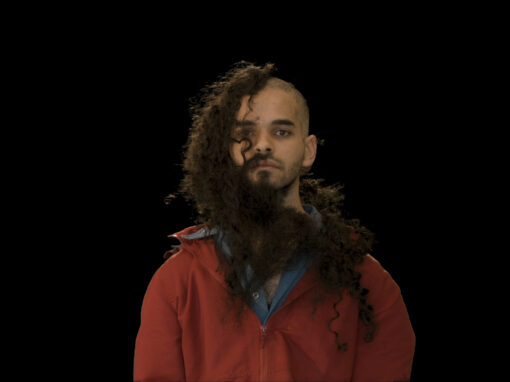
Em Pirâmide, Cinema os espectadores podem se deslocar, navegar, sofrer os solavancos dos corpos, imergir ou distrair-se, e o filme se contaminará do contexto, praça pública, trilha ecológica ou galeria de arte. A estrutura, a modelo de uma sala de Multiplex, também é compatível com qualquer filme: tem sistema de som estéreo, tela retangular e projetor de alta resolução, mas todo filme será modificado, seja pela colagem da própria instalação no espaço, seja pela possibilidade de se “tocar” o material no Resolume Arena ou outros softwares de processamento de imagens em tempo real utilizados em performances de Cinema ao Vivo ou VJing.
No lugar da poltrona confortável, o chão e as almofadas. No lugar do ar condicionado, o ar puro do Córrego do Urubu. Em vez de paredes escuras, o horizonte. A proposta de Pirâmide, Cinema é evidenciar a variedade inumerável de cinemas possíveis em relação ao “cinema só”. Pirâmide, Cinema é sobre projeção, corpo e espaço, ou seja, nada de novo.
The Pyramid, Cinema installation is five meters high and has four regular triangular faces. In fact, the structure is an iron tripod that suggests the existence of always-transparent faces that change according to the space in which the pyramid is installed.
When drawing the pyramids I dreamed of and noticing that they were not like the five-sided Giza Pyramids in Egypt, I researched and found that what I was trying to somehow achieve was the shape of the tetrahedron, one of the five Platonic solids.
I propose Pyramid, Cinema as a movie theater prototype, a utopian alternative to a rigid device, unfit for changes.
In Pyramid, Cinema, viewers can move around, navigate, feel the movements of their bodies, immerse or distract themselves, and the film will become contaminated by the context, the public square, the ecological trail or the art gallery. The structure, like a Multiplex cinema, is also compatible with any type of film: it has a stereo sound system, a rectangular screen and a high resolution projector, but the entire film will be modified either by the assembly of the art installation at the space or by the possibility of “touching” the material in the Resolume Arena or other real-time image processing software used in Live Cinema or VJing performances.
Instead of the comfortable armchair, floor and cushions. Instead of air conditioner, the fresh air of Córrego do Urubu. Instead of dark walls, the horizon. Pyramid, Cinema is an invitation to show the countless variations of potential cinemas in comparison to the “cinema by itself”. Pyramid, Cinema is about projection, body and space, i.e. nothing new.







![TERRA[CAP]](https://www.mauriciochades.com/wp-content/uploads/2020/07/PirâmideUrubuJanineMoraes65-510x382.jpg)




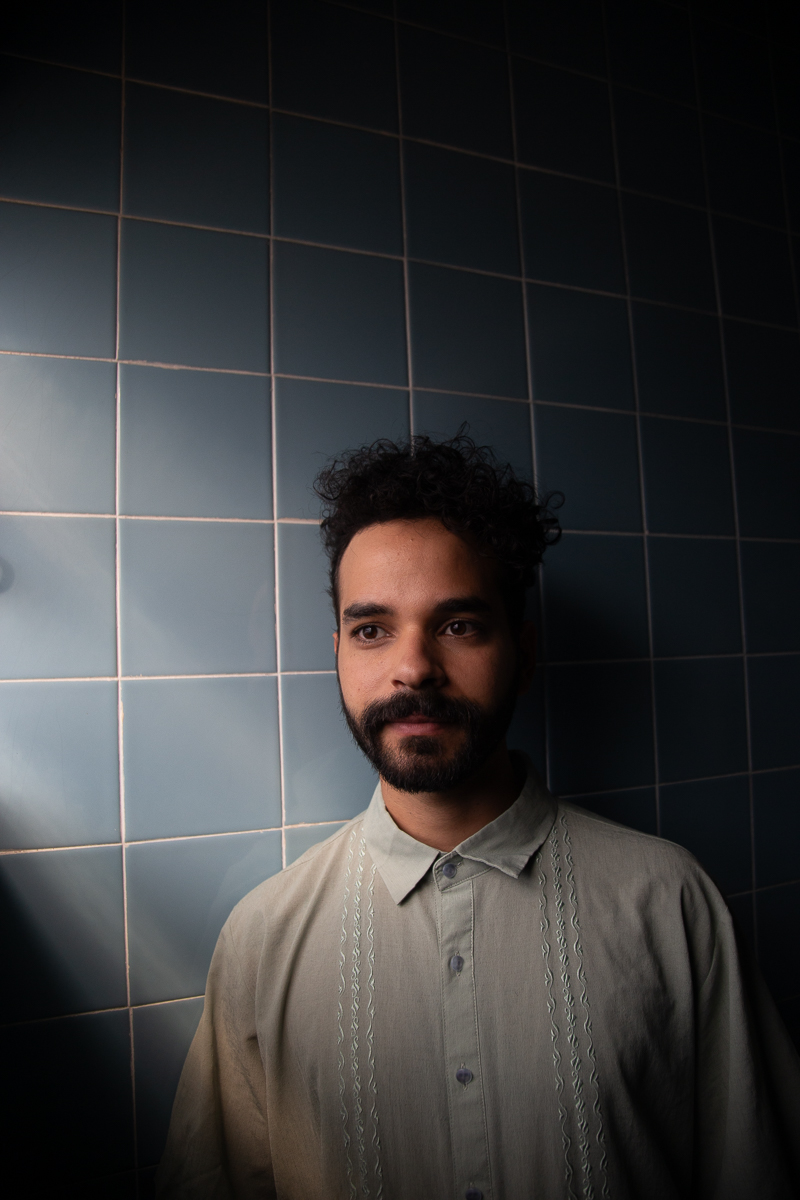
Maurício Chades (Gilbués-PI, 1991) é artista visual e cineasta, com uma prática que transita entre cinema, instalação, escultura e performance. Seu trabalho se desenvolve a partir de relações situadas com diferentes territórios no Brasil, particularmente no Cerrado e na Mata Atlântica, e, mais recentemente, estende-se aos Estados Unidos e ao Canadá. Por meio de ecologias queer, imaginários anticoloniais e formas multiespécies de parentesco, Chades investiga a decomposição, a regeneração e as fronteiras permeáveis entre o humano e o mais-que-humano. Seus projetos frequentemente partem de imersões territoriais prolongadas, colocando em diálogo conhecimentos situados, fabulação crítica e pesquisa ecológica.
Chades é mestre em Arte e Tecnologia pela Universidade de Brasília e possui MFA pela School of the Art Institute of Chicago. Sua produção tem sido exibida internacionalmente em instituições, mostras e festivais como a Bienal Sesc_Videobrasil, o Queer Lisboa e o FILE (Festival Internacional de Linguagem Eletrônica). Sua exposição individual Pirâmide, Urubu (2019) recebeu o Frankenthaler Climate Art Award em 2022, enquanto seus filmes foram reconhecidos pelo e-flux Film Award, pelo Olhar de Cinema e pelo Festival Internacional de Curtas do Rio de Janeiro. Indicado ao Prêmio PIPA em 2024, Chades está atualmente em pós-produção de seu primeiro longa-metragem, COGUM, um eco-horror que explora a decomposição e o luto interrompido como estruturas para repensar o trabalho, a ancestralidade e as relações humanas com a terra.
Maurício Chades (b. 1991, Gilbués, Piauí, Brazil) is a visual artist and filmmaker working across cinema, installation, sculpture, and performance. His work develops through situated engagements with territories in Brazil, particularly in the Cerrado and Atlantic Forest, and extends into the United States and Canada. Through queer ecologies, anticolonial imaginaries, and multispecies forms of kinship, Chades explores decomposition, regeneration, and the permeable boundaries between human and more-than-human life. His projects often emerge from prolonged territorial immersions, bringing situated knowledge, critical fabulation, and ecological research into dialogue.
Chades holds an MFA from the School of the Art Institute of Chicago and an MA in Art and Technology from the University of Brasília. His work has been exhibited internationally at venues and festivals including the Sesc_Videobrasil Biennial, Queer Lisboa, and FILE (Electronic Language International Festival). His solo exhibition Pirâmide, Urubu (2019) received the Frankenthaler Climate Art Award in 2022, while his films have received recognition from the e-flux Film Award, Curitiba International Film Festival, and Rio de Janeiro International Short Film Festival. A 2024 Pipa Prize nominee, he is currently in post-production on his debut feature film, COGUM, an eco-horror exploring decomposition and interrupted grief as frameworks for reimagining labor, ancestry, and human relationships with the land.